
How to Layer Colour and Texture in a Modern Home
Walk into ten different homes and you’ll quickly notice something: no two feel the same.
Just like people, every home has its own personality.
Some spaces are calm and minimal. Others are vibrant and eclectic. Some feel like a warm hug the moment you step in. And that’s exactly how it should be.
But here’s the funny thing about modern homes today. When everything comes from the same flat-pack aisle at IKEA, spaces can start to look… a little identical. Clean, functional, efficient — yes. But also slightly like a well-designed hotel room. Pleasant, but not personal.
Flat-pack furniture and neutral interiors are fantastic foundations. The magic happens when you start layering colour, texture, and objects that actually mean something to you.
If you’ve ever looked around your home and thought “It’s nice… but it doesn’t feel like me yet,” this guide is for you.
Here are a few simple ways to layer colour and texture into a modern home — without making it feel cluttered or overwhelming.
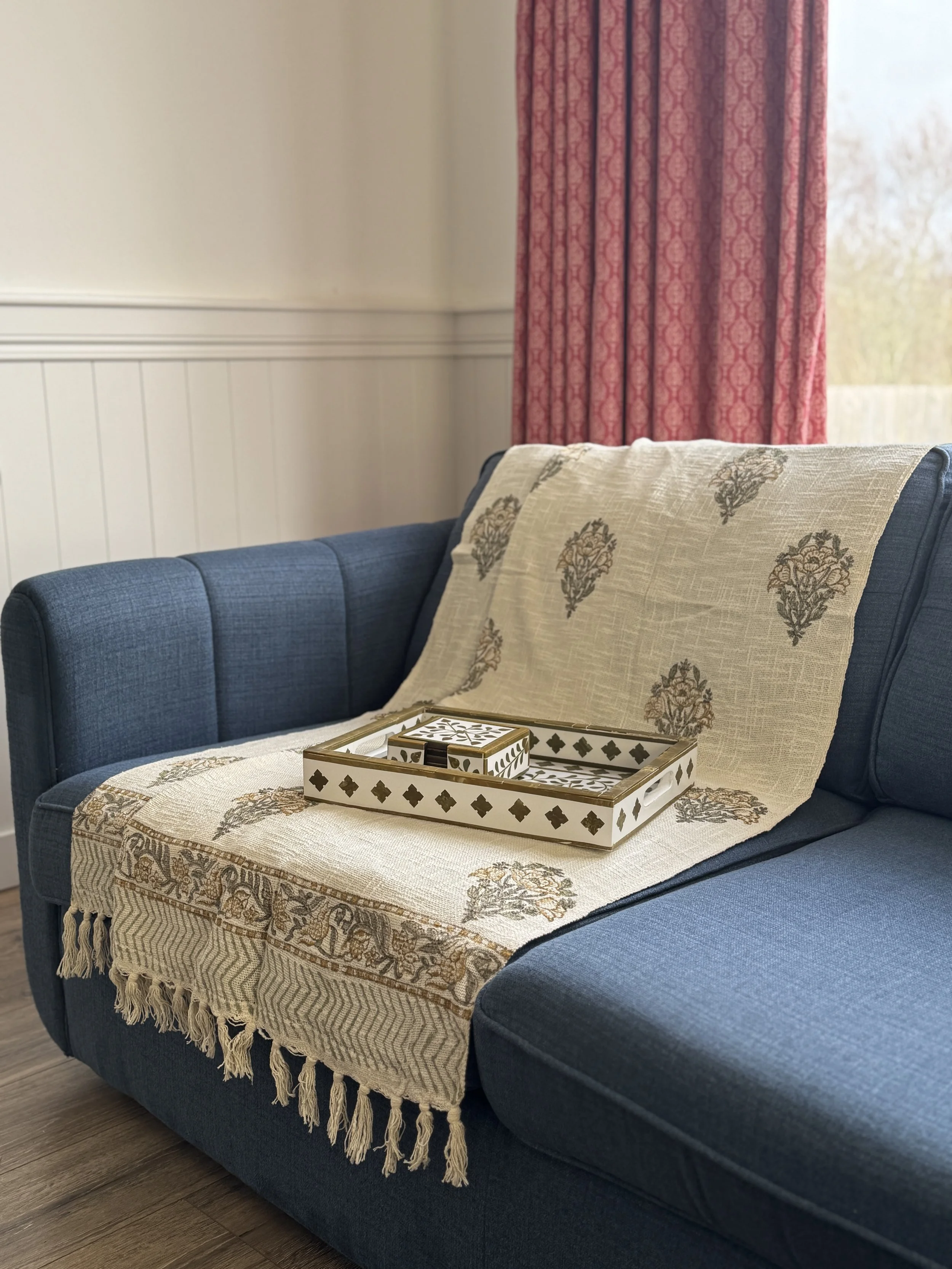
Start With a Calm Base
Layering works best when you begin with a neutral foundation. Think light woods, natural fabrics, soft greys, creams, or whites.
Modern interiors often get this part right. Neutral sofas, simple shelving, and clean-lined furniture create a calm canvas. The mistake many people make is stopping there.
A room that’s entirely neutral can feel unfinished. Like a sketch waiting for colour.
Instead, think of your base as the background of a painting. It allows the more interesting elements — colour, pattern, texture — to shine.
Introduce Colour in Small, Intentional Moments
You don’t need to repaint your walls or buy a bright sofa to introduce colour.
Small objects often make the biggest difference.
A patterned tray on a coffee table. A stack of colourful coasters. A woven basket beside a sofa. These pieces quietly introduce colour without dominating the space.
When colour appears in small moments around a room, it feels natural rather than overwhelming.
A good trick is repeating a colour two or three times across a space. For example:
A warm terracotta tray
A cushion with hints of the same tone
A small ceramic piece on a shelf
Suddenly the room feels cohesive, even though each item is different.
This is where handcrafted homewares shine. They bring colour in subtle, story-rich ways that mass-produced decor often doesn’t.
Mix Textures, Not Just Colours
Colour gets all the attention, but texture is what actually makes a room feel layered and interesting.
Imagine a room with only smooth surfaces — glass tables, polished cabinets, leather seating. It can feel slightly cold.
Now introduce contrast:
carved wood
woven cotton
hand-printed textiles
natural fibres
textured ceramics
Suddenly the space feels warmer and more human.
Texture works quietly in the background. Even if someone can’t explain why a room feels cosy, it’s usually because different materials are working together.
One of the easiest ways to add texture is through smaller functional objects — trays, storage boxes, textiles, and tableware. They’re practical pieces that also add visual depth.
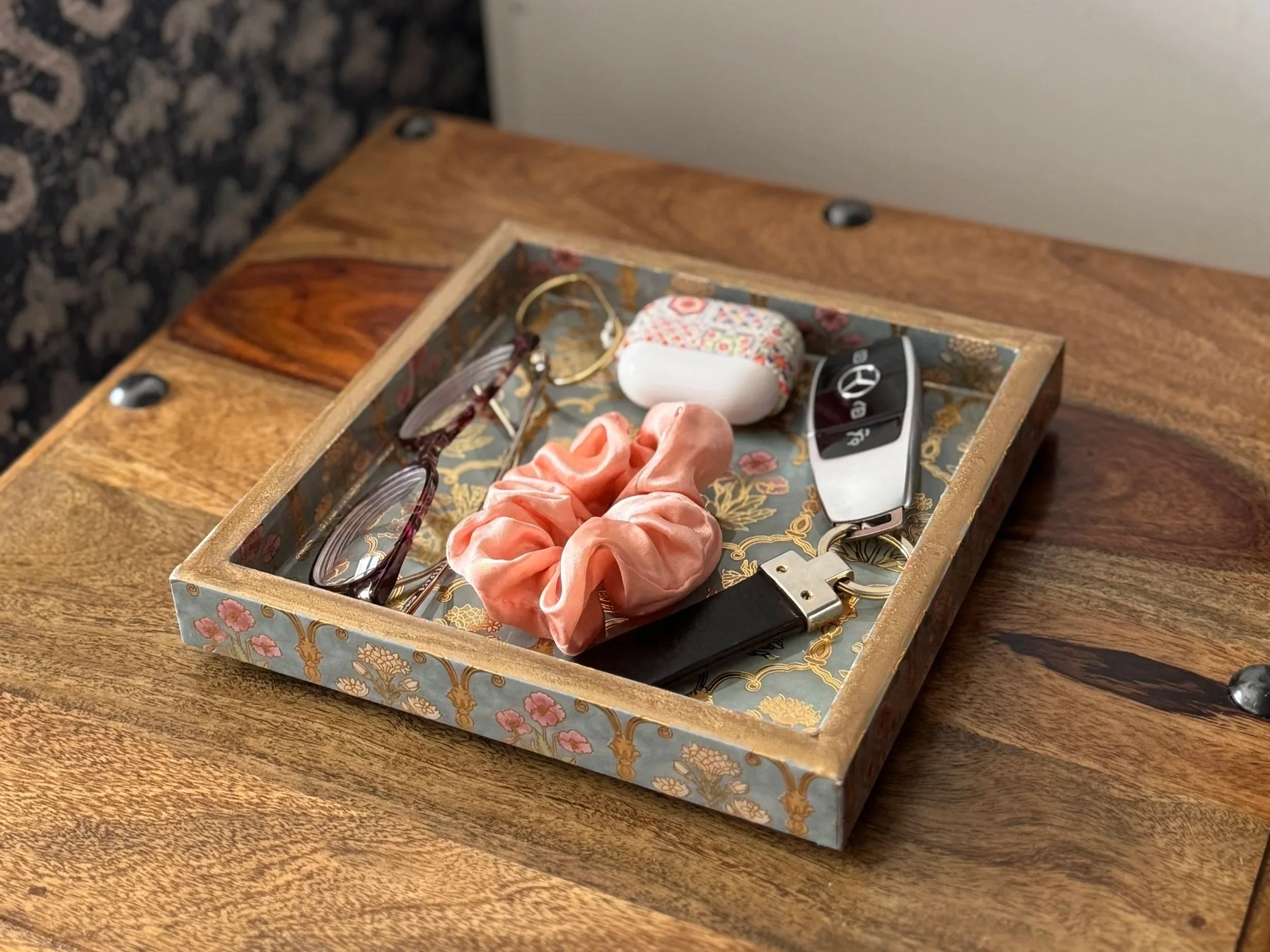
Let Patterns Tell a Story
Patterns are one of the quickest ways to bring personality into a modern home.
But layering patterns doesn’t mean filling every surface with prints. The trick is balance.
Start with one statement pattern and build around it.
For example:
a patterned textile or runner
decorative coasters
a printed tray
Once one element sets the tone, the rest of the room can remain calm.
Traditional print techniques — especially block printing — have a wonderful irregularity that feels alive in a modern space. Each piece carries subtle variations, which is exactly what stops a room from looking overly staged.
Those tiny imperfections are what give handcrafted decor its charm.
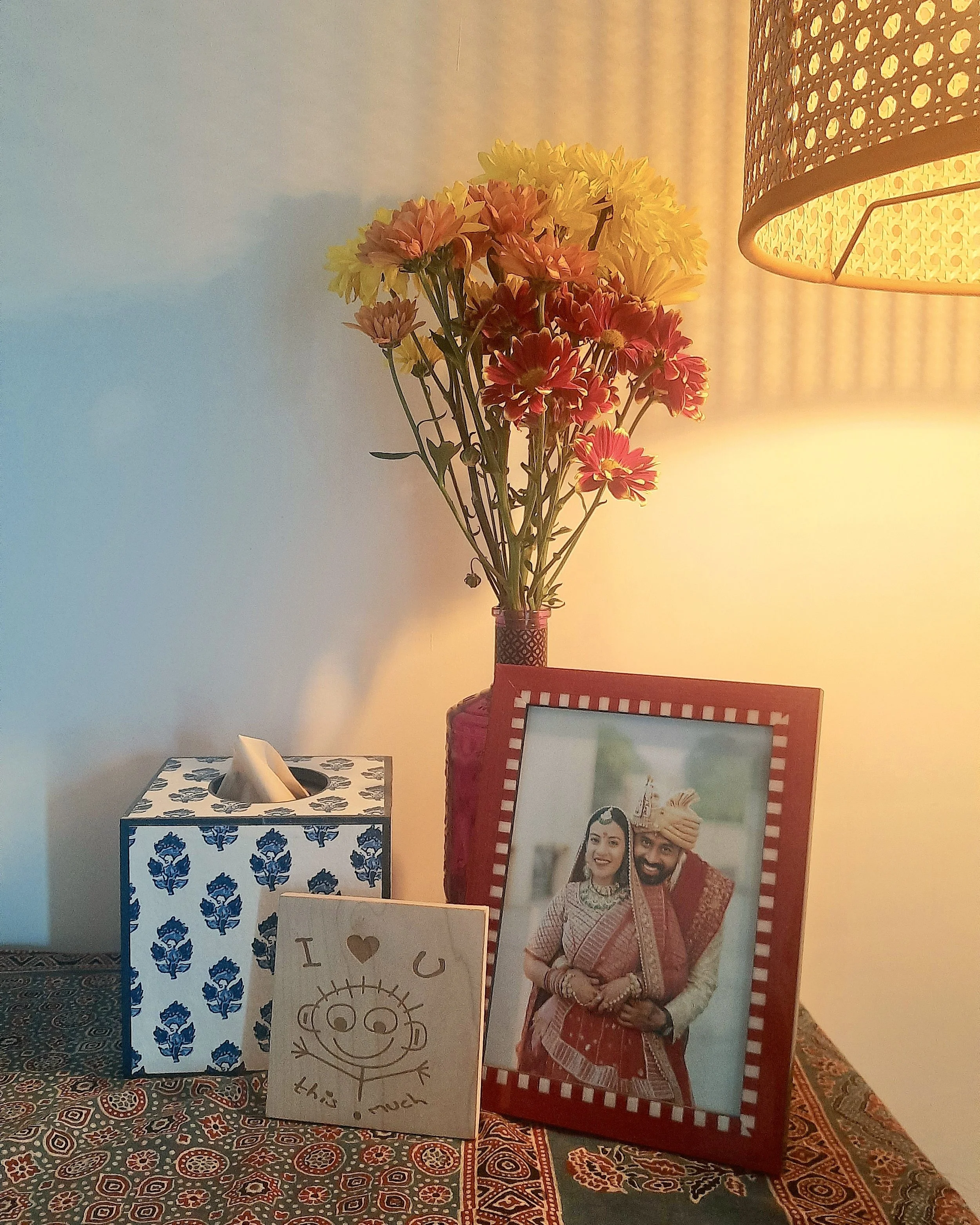
Interior stylists often create what they call “vignettes” — tiny curated corners that tell a visual story.
Instead of decorating everything, focus on small areas.
A coffee table might hold:
a decorative tray
a small stack of books
a candle or plant
A console table might include:
a lamp
a patterned box
a textured bowl
These small groupings make a home feel intentional without feeling cluttered.
Add Pieces With a Story
This is where a home truly comes to life.
The most memorable interiors almost always include objects that have a story behind them. Not just something that “matches the sofa,” but something that makes someone pause and ask, “Where did you get that?”
Maybe it’s a tray you picked up while travelling. A handcrafted box from a small market. A textile that caught your eye because the colours reminded you of a place you loved.
Suddenly that object becomes more than decor. It becomes a conversation starter.
Someone visits your home, notices it on the coffee table, and the story begins:
“Oh, I found that while travelling…”
These pieces quietly bring personality into a modern space. They break the uniformity that can sometimes happen when everything comes from the same big retailers.
Don’t Aim for Perfection
Perhaps the most important rule of decorating your home is this: don’t overthink it.
The most beautiful homes evolve slowly. Pieces are added over time. A tray bought on holiday sits beside a favourite book. A textile moves from bedroom to living room. A patterned box becomes the place where keys always end up.
And that’s the difference between a room that looks nice… and a room that feels like home.
Modern interiors give us a clean, calming starting point. Layering colour, texture, and handcrafted details is what brings warmth and personality into that space.
So if your home currently feels a little like a stylish hotel room, don’t worry. You’re already halfway there.
